Painting an Older Portland Home: What Should Be Checked First?
By the Cascade Painting & Restoration team
Before painting an older Portland home, the first step is checking the condition beneath the existing finish. Lead-based paint, moisture, wood rot, loose coatings, and wall damage all need to be identified before new paint is applied. Older homes often contain a mix of original materials, later repairs, and multiple paint layers, so the preparation should match the actual condition of each surface.
Cascade Painting & Restoration starts with a careful walkthrough to find those issues early and determine what should be repaired, cleaned, scraped, primed, or replaced. That gives homeowners a clearer scope of work and creates a stronger surface for the new finish, reducing the chance of peeling, staining, or repeated repairs later.
Start With the Home’s Age and Alteration History
The year the house was built is useful, but it doesn’t tell the whole story. A 1910 Portland home may have original cedar siding on one wall, replacement siding on another, old plaster indoors, and newer drywall in an addition. Those materials shouldn’t all be prepared the same way.
Changes in trim profiles, siding widths, wall texture, windows, and paint buildup often reveal where newer work meets original construction. Ask about past leaks or additions if records are available. Unevenness may come from old paint buildup, or it may signal movement and deterioration underneath.

Check for Lead Paint Before Scraping or Sanding
Any Portland house built before 1978 should be treated as potentially containing lead-based paint unless testing shows otherwise. Lead paint isn’t automatically a crisis when it’s intact and undisturbed. The concern grows when sanding, scraping, cutting, or window work creates chips and fine dust.
Oregon administers its own Renovation, Repair and Painting requirements. Homeowners can review the Oregon Health Authority’s RRP guidance for information about covered work and contractor certification.
Before hiring a painter for a pre-1978 home, ask how possible lead paint will be handled and whether lead-based paint renovation credentials apply. Lead-safe work involves containment, controlled work methods, and thorough cleanup. An ordinary dust mask and a drop cloth aren’t an adequate plan.
Find Moisture Before Covering the Evidence
Portland’s wet climate makes moisture one of the first things to investigate. Peeling paint is sometimes blamed on age, but recurring failure in one area often points to water getting into or behind the surface.
Outside, pay close attention to window sills, fascia, soffits, porch components, siding near the ground, and walls below roof intersections. Check areas near overflowing gutters and shaded elevations that stay damp after rain.
Inside, trace water stains before sealing and painting them. Bubbling paint, swollen trim, musty odors, or soft drywall can indicate that moisture is still present. A stain from a repaired leak is different from one that remains active.
Painting over damp material traps the problem. A stain-blocking primer won’t repair a roof leak, failed flashing, plumbing issue, or condensation problem. The source needs to be corrected and the surface allowed to dry.
Cascade’s guide to paint preparation in Portland’s wet climate explains why cleaning and drying time matter before exterior painting.
Probe Wood Siding and Trim for Rot
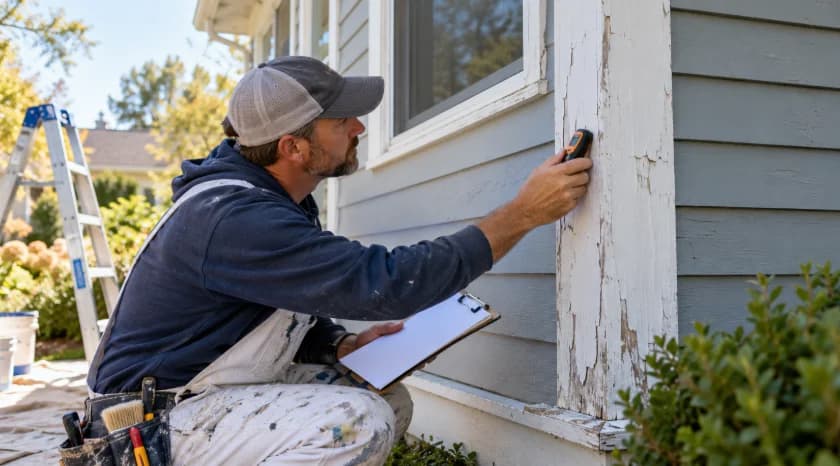
Old wood can remain solid for decades, but paint won’t restore wood that has started to decay. Areas that look like heavy peeling sometimes reveal soft fibers once the loose coating is removed.
Sound wood feels firm. Rotted wood may feel spongy, crumble at the edges, or allow a tool to press in with little resistance. Check end grain, joints, lower trim edges, window sills, fascia, and places where water sits.
Some damage calls for a local repair. A badly deteriorated board may need replacement. The goal is to preserve sound wood and replace portions that no longer provide a stable base.
Cascade Painting & Restoration handles carpentry repairs for damaged siding, trim, fascia, and soffits as part of many painting projects.
Determine Why the Existing Paint Is Failing
Loose paint needs to be removed, but scraping is only part of the diagnosis. It’s important to know why it came loose.
Paint may fail because the last coat was applied over a dirty or glossy surface. Moisture can push a coating away from the substrate. A brittle older layer may crack as wood moves. Incompatible products can also create adhesion problems.
The pattern gives clues. Failure near gutters and sills points toward moisture. Broad peeling over a smooth older coating may suggest poor adhesion. Cracking through many layers often reflects an aging paint film.
New paint relies on the strength of the layers beneath it. If those layers release, the new coating comes off with them. Preparation should continue until the remaining material is clean, dry, and firmly attached.
Inspect Caulking and Water-Shedding Details
Check caulk around windows, doors, trim joints, penetrations, and other appropriate seams. Cracked or missing caulk can let water into vulnerable areas.
That doesn’t mean every gap should be sealed. Some openings are intentional drainage or ventilation paths. Sealing them can trap moisture. Flashing and horizontal ledges also deserve attention because paint and caulk aren’t substitutes for proper water management.
A painting walkthrough should separate coating work from construction problems. If flashing directs water behind siding, it needs a real repair rather than a thicker bead of caulk.
Check Interior Plaster, Drywall, and Trim
Older Portland interiors often contain a mix of plaster and drywall. Hairline plaster cracks may be stable and repairable, while bulging or hollow-sounding areas can indicate separation from the backing. Drywall may show old patches, nail pops, texture mismatches, or damage from previous leaks.
Paint changes color and sheen, but it doesn’t flatten a poor patch or reconnect loose plaster. Repairs should be completed and allowed to cure before priming. Cascade’s drywall repair services include patching, water-damaged sections, and texture matching.
Old enamel on trim can be smooth and hard. Cleaning, dulling, and a suitable bonding primer may be needed. Doors and windows also have friction points where paint builds up and wears differently from wall paint.
Decide What Should Be Preserved
Older homes often contain materials that are difficult to reproduce, including old-growth wood siding, original trim profiles, built-ins, and historic windows. A careful project preserves sound features rather than replacing them for convenience.
If the property is a designated historic resource, certain exterior changes may require local review. Portland’s official page on making changes to a historic resource is a useful starting point before altering significant exterior features.
Put the Work in the Right Order
Once the inspection is complete, organize the project around the condition of the house rather than the fastest route to a finished color.
A practical scope may include:
- Identify lead-related requirements before disturbing paint
- Correct active leaks and other moisture sources
- Repair rotted wood, loose plaster, or damaged drywall
- Clean surfaces and remove paint that is no longer attached
- Sand or de-gloss where needed without damaging original material
- Caulk appropriate joints and prime bare or repaired areas
- Apply coatings suited to the substrate and exposure
Not every home needs every step. The inspection separates necessary work from work that would add cost without improving the result.
Questions to Ask During an Estimate
A detailed estimate should explain how the contractor reached the scope. Useful questions include:
- How will possible lead paint be handled?
- Which areas show moisture damage or rot?
- What repairs are included, and what is priced separately?
- How much scraping or sanding is expected?
- Where will primer be used?
- How will glossy older coatings be prepared?
- What conditions could change the price after work begins?
Some deterioration stays hidden until loose paint or damaged material is removed. The estimate should state how new findings will be documented and discussed.
Painting an Older Portland Home With Fewer Surprises
Painting older homes in Portland starts with figuring out what the house needs before deciding how it should look. Lead safety, moisture, wood condition, existing coatings, and wall repairs all affect the finished work.
Cascade Painting & Restoration provides exterior painting in Portland along with carpentry and wall repairs when the surface needs attention first. To discuss an older home and request a walkthrough, contact Cascade Painting & Restoration.
Related Guides
Recent Blogs
october 19, 2026
What Should Be Included in a Professional House Painting Estimate?
october 16, 2026
How Wall Texture Affects Paint Color, Sheen, and Room Lighting

october 13, 2026
How to Choose a Kitchen Cabinet Color You Will Not Regret
september 25, 2026
Should You Paint Kitchen Cabinets Before or After Repainting the Walls?
september 21, 2026
Flat, Eggshell, or Satin: Which Paint Finish Is Best for High-Traffic Rooms?
Contact Information
Reach out to us for a free estimate. We're here to help with all your painting needs.
- Call At:(503) 936-3255
- Email Us At:cascadepaintandres@gmail.com
- Hours:Mon–Sun 8 AM – 6 PM
- Serving:Portland Metro Area